No products in the cart.
Understanding the Differences Between Amazon Return Pallets and Branded Overstock Pallets for Resellers
Amazon Returns Pallets vs Branded Overstock Pallets: What’s the Difference?
If you are searching for profitable inventory for a resale business, understanding Amazon Returns Pallets vs Branded Overstock Pallets can make a major difference in how you spend your money. Both options give entrepreneurs access to wholesale merchandise at prices that can be significantly lower than traditional retail costs. However, the products, condition, risk level, resale potential, and profit margins can vary considerably. Amazon return pallets may contain customer-returned merchandise from multiple product categories, while branded overstock pallets usually consist of excess inventory from recognizable retailers or manufacturers. Therefore, choosing the right type of liquidation inventory depends on your business model, customer base, available capital, and willingness to inspect and sort merchandise. Whether you sell online, operate a discount store, manage a flea market booth, or are building a growing e-commerce business, learning the differences between these two inventory sources can help you buy smarter and reduce costly mistakes.
What Are Amazon Returns Pallets?
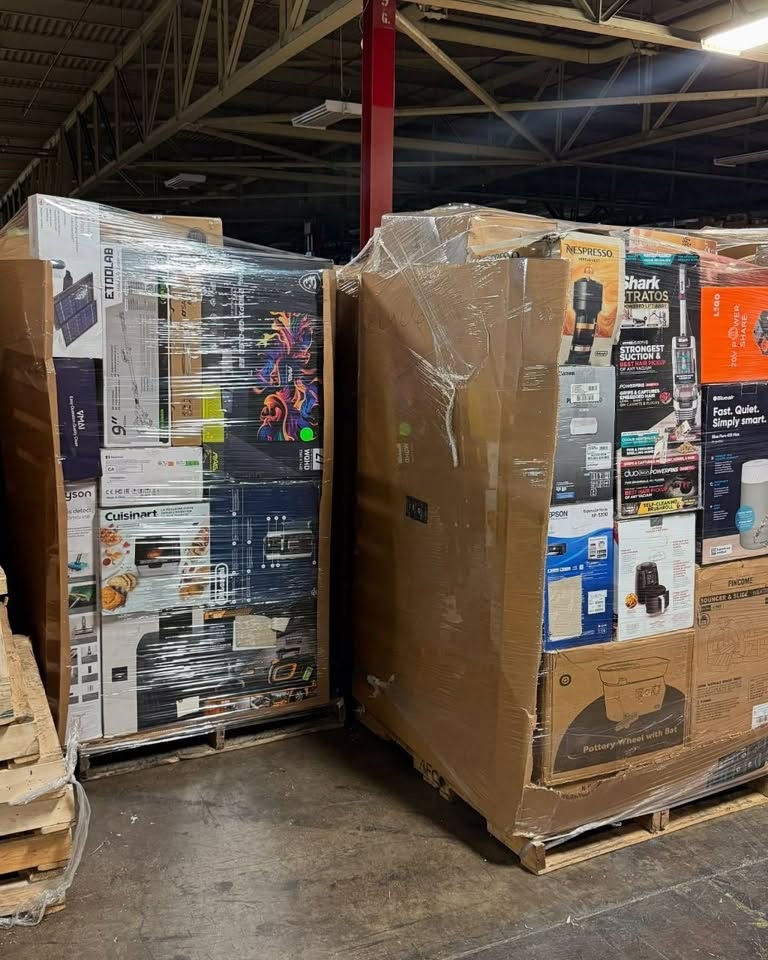
Amazon returns pallets are bulk loads of merchandise that customers have returned after purchasing products through Amazon. These returned items can include electronics, home goods, toys, kitchen products, clothing, tools, small appliances, beauty products, and many other categories. Because customer returns may happen for countless reasons, the condition of the merchandise can vary widely. For example, a customer may return a product because they ordered the wrong size, changed their mind, received a duplicate item, or discovered a minor issue. Consequently, some products may be unused and still in excellent condition, while others may show signs of wear, have damaged packaging, be incomplete, or require testing and repair. This variety creates both opportunity and risk for resellers. Buyers can sometimes uncover high-value merchandise at attractive wholesale prices; however, they must also be prepared to sort inventory and account for products that cannot be resold at full value.
For entrepreneurs entering the liquidation industry, Amazon return pallets can offer access to a broad and unpredictable mix of products. This can be particularly useful for sellers who enjoy treasure-hunt inventory and have multiple resale channels. For instance, working electronics may be sold through online marketplaces, household goods may perform well in local stores, and lower-value items may be bundled or sold at clearance prices. Nevertheless, profitability depends heavily on buying from a reliable liquidation source and understanding the condition of the merchandise before purchasing. A business should never assume that every item on a pallet is new or ready for immediate resale. Instead, buyers should review available descriptions, manifests, categories, and pallet conditions whenever possible. You can begin exploring wholesale inventory through Liquidation Pallet Sales LLC or browse available merchandise in the online liquidation shop.
What Are Branded Overstock Pallets?
Branded overstock pallets generally contain excess inventory that retailers, distributors, or manufacturers need to move out of their regular supply chain. Unlike customer-returned merchandise, overstock products are often inventory that was never sold to the final consumer. The merchandise may include discontinued products, seasonal inventory, canceled orders, shelf pulls, excess stock, packaging changes, or products from retailers making room for newer merchandise. As a result, the overall condition of branded overstock can often be more predictable than mixed customer returns. Many resellers prefer this type of inventory because recognizable brands can be easier to market and may inspire greater buyer confidence. However, the purchase price may also be higher because the merchandise can have stronger resale appeal and more consistent condition.
The phrase Amazon Returns Pallets vs Branded Overstock Pallets is especially important for new buyers because these categories can look similar from a distance while offering very different business opportunities. Branded overstock inventory may be a stronger option for sellers who want more consistency in their product listings and customer experience. For example, a reseller purchasing a pallet of recognizable clothing brands can often create clearer listings, estimate prices more accurately, and build targeted marketing campaigns. Similarly, businesses specializing in specific categories can browse inventory based on their audience rather than purchasing completely mixed merchandise. Options such as wholesale clothing pallets can be particularly attractive for fashion resellers seeking bulk inventory with a more focused product selection.
Amazon Returns Pallets vs Branded Overstock Pallets: The Main Difference
The biggest difference between Amazon Returns Pallets vs Branded Overstock Pallets is typically the origin and condition of the merchandise. Amazon returns consist of products that have already entered the consumer purchasing cycle and were subsequently sent back. Branded overstock, on the other hand, generally represents excess inventory that businesses need to liquidate, even though many products may never have been purchased or used by an end customer. Therefore, Amazon returns can involve greater uncertainty, while branded overstock may offer a more predictable inventory profile. This does not automatically mean one option is always better. Instead, the better choice depends on how much risk your business can manage and how efficiently you can process, test, clean, repair, photograph, and sell inventory.
Additionally, the merchandise mix can be dramatically different. Amazon return pallets may contain a wide range of unrelated products, which can create exciting opportunities but also increase labor requirements. Branded overstock pallets may offer more uniform inventory, making them easier to organize and market. Consequently, a beginner with limited storage and labor may prefer inventory that is easier to identify and price. Conversely, an experienced reseller with testing equipment, repair knowledge, and several sales channels may find greater opportunity in mixed returns. The important factor is not simply finding the cheapest pallet. Instead, successful buyers calculate the total landed cost, including the purchase price, shipping, labor, storage, repairs, marketplace fees, and potential losses.
Comparing Product Condition and Quality
Product condition is one of the most important factors when evaluating liquidation pallets. Amazon returns can range from unopened merchandise to visibly used products or items with missing accessories. In some cases, the original packaging may be damaged even though the product itself works perfectly. In other situations, a product may need inspection before it can be listed for resale. Therefore, buyers should develop a clear process for grading inventory. For example, products can be separated into new, open-box, tested working, used, damaged, parts-only, and unsellable categories. This approach helps prevent confusion and allows a business to price products according to their actual condition rather than their original retail value.
Branded overstock often offers a different advantage because the products may have less customer handling. Although overstock merchandise can still include shelf pulls, damaged packaging, or discontinued inventory, it may require less testing and refurbishment than returned merchandise. Consequently, businesses focused on speed and predictable workflows may find overstock easier to process. However, buyers should still inspect available details before making a purchase. Overstock does not automatically mean every item is factory-sealed or perfect. Smart liquidation buyers ask questions, review descriptions, and understand what they are buying. Moreover, consumer-protection and business guidance from the Federal Trade Commission and the U.S. Small Business Administration can be useful resources when building responsible purchasing and business practices.
Which Pallets Have Better Profit Potential?
When comparing Amazon Returns Pallets vs Branded Overstock Pallets, profit potential cannot be measured by purchase price alone. A $500 pallet may look like an incredible bargain, yet it could become expensive if a large percentage of the merchandise is damaged, difficult to test, or impossible to sell. On the other hand, a higher-priced branded overstock pallet may produce stronger and faster sales if the products are recognizable, consistent, and easier to list. Therefore, experienced resellers focus on potential net profit rather than simply looking for the cheapest wholesale pallet. They estimate realistic selling prices, subtract all expenses, and consider how long the inventory may remain in storage before making another purchase.
Amazon returns can sometimes produce exceptional margins because buyers may acquire products at a substantial discount relative to original retail prices. Nevertheless, those margins can disappear when too much time and labor are required to process the merchandise. Branded overstock can provide more predictable inventory and potentially faster turnover, especially when the products match an established customer audience. Consequently, the best approach is often to align the pallet with your existing sales system. A seller with a successful electronics repair operation may welcome customer returns, while a boutique reseller may prefer branded clothing or accessories. You can explore category-specific inventory through available liquidation categories and compare products that fit your particular resale strategy.
Risk Levels for Resellers
Every liquidation purchase involves some degree of risk, but the type of risk differs between Amazon returns and branded overstock. Amazon return pallets often involve condition uncertainty. You may discover products with missing parts, cosmetic damage, technical problems, or reduced resale value. Therefore, these pallets generally reward buyers who have experience evaluating merchandise and finding multiple ways to monetize different condition grades. For example, an item that cannot be sold as new may still generate revenue as open-box merchandise, refurbished inventory, replacement parts, or a bundle. However, this requires knowledge, labor, storage, and a well-organized resale process.
Branded overstock pallets may reduce some of that condition uncertainty, although they introduce other considerations. For instance, a pallet may contain seasonal merchandise, discontinued products, or inventory that appeals to a narrow market. Consequently, the products could be in excellent condition but still take time to sell. The comparison of Amazon Returns Pallets vs Branded Overstock Pallets should therefore include both product risk and market risk. Before buying, ask yourself whether you already know who will purchase the merchandise. If you cannot clearly identify your target customer, even a heavily discounted pallet may become slow-moving inventory. Market research, pricing analysis, and basic small-business planning can help sellers make more informed decisions before committing capital.
Resale Channels and Customer Expectations
Your preferred resale channel should strongly influence the type of liquidation pallet you purchase. Online marketplaces often require detailed product descriptions, accurate condition information, photographs, and reliable fulfillment. Therefore, branded overstock may be easier to manage because the products can be more consistent and easier to identify. A seller can create repeatable listing templates, organize products by brand, and develop targeted keywords. Meanwhile, Amazon return pallets may require significantly more individual inspection. This additional work can be worthwhile, especially if you have staff, testing procedures, and several marketplaces available for different types of merchandise.
Physical discount stores and local resale operations may benefit from the variety found in return pallets. Customers often enjoy browsing mixed inventory and discovering unexpected products. Consequently, a business with strong foot traffic may be able to sell diverse merchandise more efficiently than an online-only seller. Clothing, home goods, electronics, and general merchandise can also be separated into different sales channels. For businesses that want to explore additional inventory categories, the electronics and related liquidation selection and mixed category inventory can help buyers identify merchandise that matches their resale model.
How to Calculate the True Cost of a Liquidation Pallet
One of the most common mistakes new resellers make is focusing entirely on the pallet price. In reality, the true cost includes much more than the amount paid to the supplier. First, calculate the purchase price and shipping expenses. Next, estimate the labor required to unload, sort, test, clean, photograph, list, package, and ship individual items. Additionally, include storage costs, marketplace fees, payment processing charges, returns, repairs, and unsellable merchandise. Once these expenses are considered, you will have a more realistic picture of potential profitability. This calculation is particularly important when comparing Amazon Returns Pallets vs Branded Overstock Pallets, because one pallet may be cheaper initially but require significantly more work after delivery.
For example, imagine two pallets with similar estimated retail values. The Amazon returns pallet costs less, but 20 percent of the items require testing and another portion needs replacement parts or cannot be sold. The branded overstock pallet costs more, yet most products can be listed immediately. In this situation, the second pallet may generate a better hourly return even if its gross margin is lower. Therefore, business owners should think about both money and time. Reliable data can also help entrepreneurs understand broader markets and consumer activity. Resources such as the U.S. Census Bureau can provide valuable economic and business information for those researching markets and planning growth.
Best Pallet Choice for Beginners
For beginners, branded overstock pallets may often provide a simpler starting point because inventory can be more predictable and require less product testing. A new reseller already has plenty to learn, including pricing, photography, customer service, shipping, inventory management, and marketing. Therefore, starting with merchandise that is easier to identify can reduce operational complexity. Branded products may also be easier for customers to recognize, which can simplify advertising and improve buyer confidence. However, beginners should still avoid purchasing more inventory than they can realistically process. Starting with a manageable quantity and learning the workflow is often better than filling a warehouse with merchandise that remains untouched.
That said, beginners should not automatically avoid Amazon return pallets. They can be a practical choice for entrepreneurs who have experience with certain product categories or access to local resale channels. The key is understanding exactly what level of uncertainty you are accepting. When researching Amazon Returns Pallets vs Branded Overstock Pallets, consider your available time, storage space, technical knowledge, and sales experience. You can review general merchandise options or browse additional wholesale pallet inventory to compare categories before deciding which business model feels most manageable.
Best Choice for Experienced Resellers
Experienced resellers may have an advantage with Amazon returns because they already understand how to process inconsistent inventory. They may have established testing stations, repair contacts, employees, photography systems, and multiple sales channels. As a result, products that appear inconvenient to a beginner may represent additional profit opportunities for a more experienced operation. A knowledgeable reseller can identify valuable items quickly, separate high-demand merchandise, repair products where practical, and move lower-value inventory through bundles, auctions, discount bins, or local sales. Consequently, the complexity of return pallets can sometimes become a competitive advantage rather than a disadvantage.
Branded overstock remains attractive for experienced businesses as well, especially those seeking consistent inventory and scalable operations. For example, an established e-commerce store may prefer repeatable product categories that can be listed and advertised efficiently. Platforms such as Shopify can support businesses building independent online storefronts and developing direct customer relationships. Ultimately, Amazon Returns Pallets vs Branded Overstock Pallets is not simply a beginner-versus-expert decision. Instead, it is a question of operational fit. The most profitable inventory is usually the inventory your business can process, market, and sell efficiently.
How to Choose the Right Liquidation Supplier
Selecting the right supplier is just as important as selecting the right type of pallet. Before placing an order, review the supplier’s available inventory, product descriptions, categories, ordering process, and customer support options. Furthermore, make sure you understand shipping arrangements, pallet condition, and any information provided about the merchandise. A reputable supplier should make it easier for buyers to explore available products and contact the business when they have questions. For example, you can learn more about the company through the About Us page and reach out through the Contact Us page before making a purchasing decision.
Additionally, avoid treating liquidation inventory as a guaranteed-profit investment. Even high-quality merchandise requires customers, competitive pricing, marketing, and efficient operations. Therefore, it is wise to begin with inventory that matches your current capabilities and gradually expand as you gain experience. Keep records of each pallet purchase, including cost, shipping, sell-through rate, labor time, and final profit. Over time, this information will reveal which categories and pallet types perform best for your specific business. You may also discover that combining Amazon returns and branded overstock creates a more balanced inventory strategy.
Amazon Returns Pallets vs Branded Overstock Pallets: Which One Should You Buy?
The final decision between Amazon Returns Pallets vs Branded Overstock Pallets depends on your business goals. If you enjoy sorting diverse merchandise, have experience testing products, and operate several resale channels, Amazon return pallets may offer strong opportunities at competitive wholesale prices. However, you must be comfortable with inconsistent condition and additional processing. On the other hand, if you prefer recognizable products, more predictable inventory, and a simpler listing process, branded overstock pallets may be the better fit. Although they can sometimes require a larger initial investment, they may save time and create a smoother workflow.
Ultimately, the smartest strategy is to stop asking which pallet is universally “best” and instead ask which pallet is best for your business right now. Consider your budget, storage capacity, labor resources, customer demand, and preferred selling channels. Then compare available inventory and make decisions based on realistic resale values rather than inflated retail prices. Whether you are looking for general merchandise, clothing, electronics, or other wholesale inventory, you can explore available liquidation pallets and inventory to find products that align with your business goals.
Final Thoughts
Understanding Amazon Returns Pallets vs Branded Overstock Pallets can help you make more strategic buying decisions and build a stronger resale operation. Amazon returns may offer variety, lower entry prices, and the excitement of uncovering valuable merchandise. However, they also require more inspection and a greater tolerance for uncertainty. Branded overstock may provide better consistency, recognizable products, and a smoother path from purchase to resale. Nevertheless, every pallet should still be evaluated carefully because profitability depends on demand, expenses, product condition, and execution.
Therefore, the best liquidation buyers combine careful research with practical experience. Start by identifying the products your customers actually want, calculate your total costs, and choose inventory that fits your operational capabilities. Then, track your results and use that information to improve future purchases. By approaching Amazon Returns Pallets vs Branded Overstock Pallets with a clear strategy instead of chasing the lowest price, you can make smarter inventory decisions, protect your capital, and create more opportunities for sustainable growth in the wholesale liquidation and resale business.